On this page
Find the number in the office locator
Social Security says the mailing address and fax number for sending forms and documents to your local office are in its online office locator. To find them:
- Go to ssa.gov/locator and search by address, city, state or ZIP code. For an office abroad, use the locator’s “Offices outside the United States” link instead.
- The results list the nearest offices with their distance and street address. Choose your office and open Office information.
- Under Contact numbers, the page lists a phone number, a TTY number and a fax number. The fax number is the one to use.
- Check the mailing address on the same page. It isn’t always the street address: for some offices, mail goes to a central PO box in another state.
The phone number shown is usually Social Security’s national line, 1-800-772-1213, rather than the office’s own: its open-data notes say the office listings are supplemented with that number. Social Security’s operations manual also says fax numbers can be found in the locator or by calling that line.
Which office to send to
- Your local office, for most forms. Social Security says you can fax or mail any paper form to your local office, unless the form tells you otherwise.
- The office that wrote to you. Some forms, such as the SSA-3368 disability report, say to send the completed form to the office that requested it. If a letter from Social Security gives a fax number, use that one.
- Check the services. Each office page shows which services it offers, such as benefits applications, cards, updates to personal information, appeals and a drop box. Some locations don’t handle card replacements and updates, and card centers offer only express card services, not benefits applications or appeals.
Hearing offices have their own numbers
If you’ve asked for a hearing before an administrative law judge, evidence goes to the hearing office handling your case, not your local office. Social Security says you can send it by mail or fax, using the toll-free fax number with area code 833 assigned to that hearing office. The number is printed at the top of every notice the hearing office sends you, and the hearing office locator on ssa.gov lists each office’s telephone and fax numbers.
For a hearing about whether you have a disability, Social Security says to submit written evidence, or tell it about the evidence, no later than 5 business days before the hearing. The hearing office replies by mail, at the address on your application.
Requests for reconsideration, hearings and Appeals Council review themselves generally go through your local office, or online.
Faxes with a barcode page, sent to the electronic folder, need that barcode as the first page: turn FaxTonic’s cover page off for them. Social Security asks for larger submissions to be split into parts with the barcode at the front of each. A FaxTonic fax can have up to 20 pages, so send each part as its own fax.
What a fax can and can’t replace
Forms Social Security says it accepts by fax include the SSA-1696 to appoint a representative, the SSA-827 authorization, signed in ink, the Medicare Part B forms CMS-40B and CMS-L564, and requests for reconsideration. More on each, and on the VA and state agencies, in the benefits fax guide.
- Not original documents. For a Social Security card, the agency needs original documents or copies certified by the agency that issued them, and it doesn’t accept photocopies or notarized copies. Its manual treats a fax sent by a claimant like an uncertified photocopy.
- Not a signed benefit application. Since 2023 Social Security no longer accepts faxed, signed applications as valid applications. A faxed application can still set a protective filing date.
Many tasks don’t need a fax at all. A my Social Security account lets you request a replacement card, change your address, print a benefit verification letter and upload documents and select forms. Social Security notes that originals and certified copies can’t be sent that way either.
Watch for fake letters
Social Security warns about fake calls, texts, emails, websites and letters in its name, and says scammers send pictures of official-looking documents. Take fax numbers from ssa.gov, or from a notice you know is genuine.
How to fax your Social Security office with FaxTonic
- Find the fax number on your office’s page in the locator, or on your notice.
- Scan the completed, signed form, or photograph each page flat and in good light. FaxTonic takes PDF, JPEG, and PNG files, up to 4 MB once prepared for faxing.
- Open FaxTonic and add your file. For a local office, keep the free cover page with your name, a phone number and the form number in the subject. For a barcode fax, turn the cover page off.
- Choose the United States, enter the fax number and check the price: $1.49 a page. Then pay by card.
- Save a screenshot of the status page once the fax is delivered.
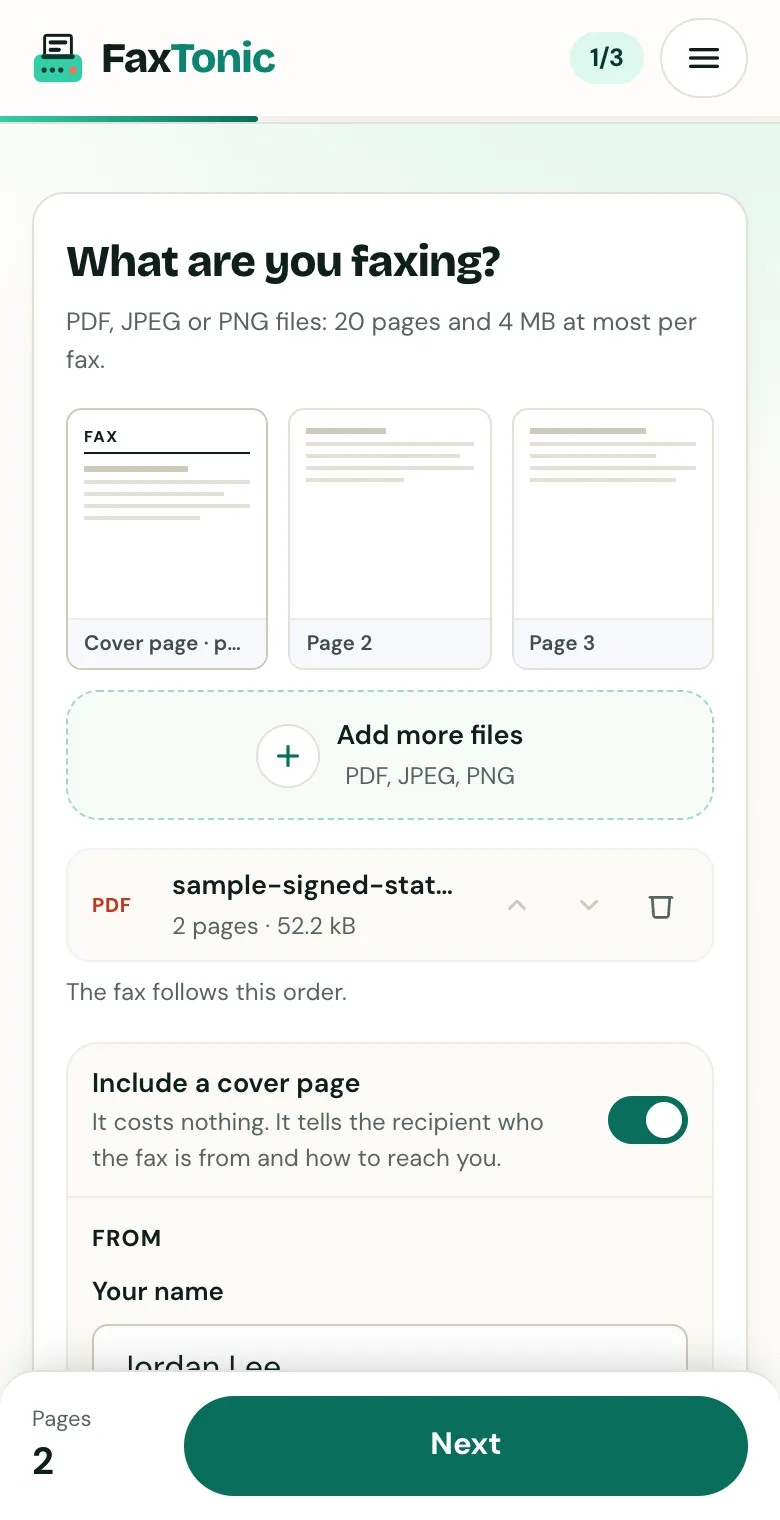
Add your file. The cover page is free, and you can turn it off.
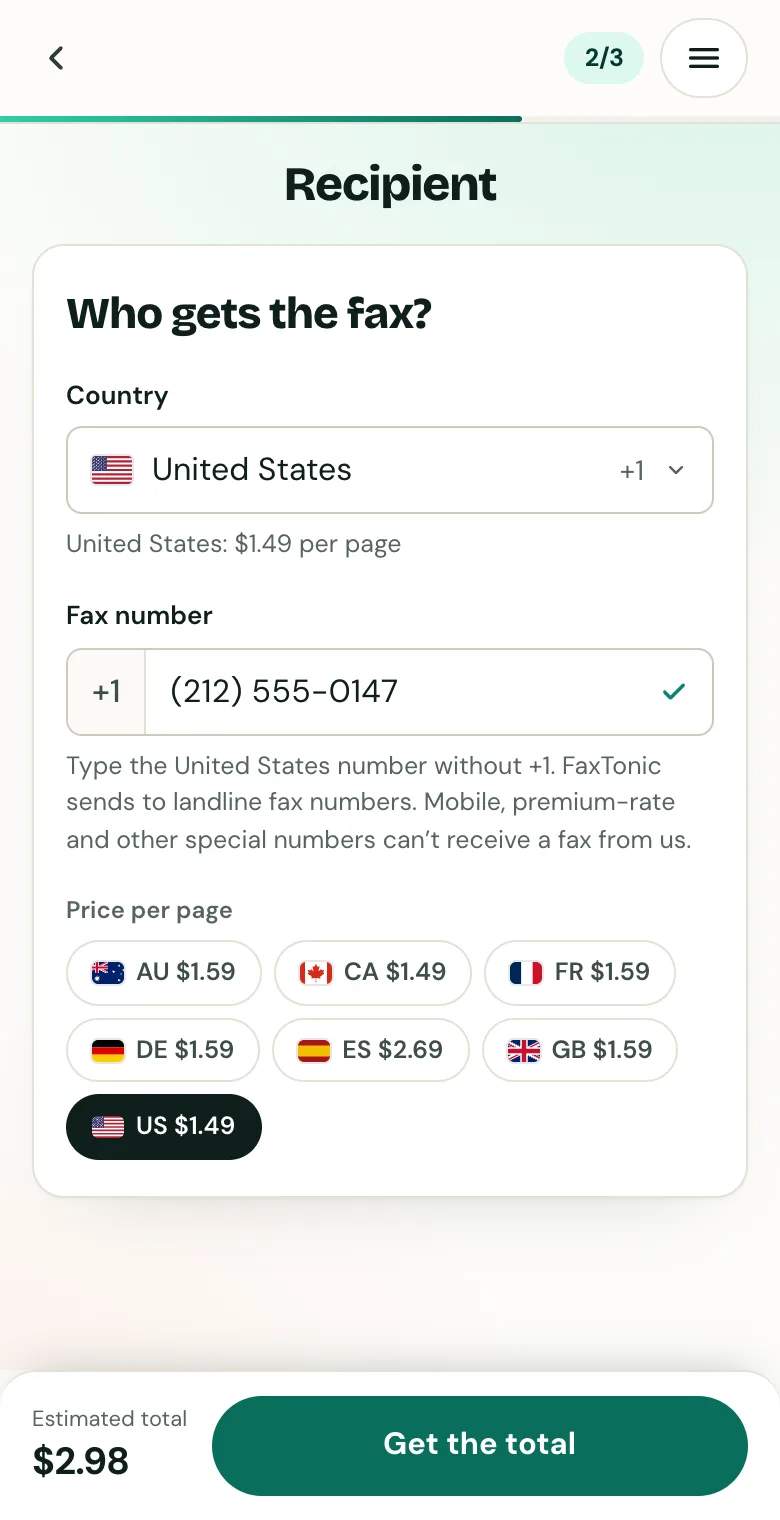
Pick the country and type the fax number.
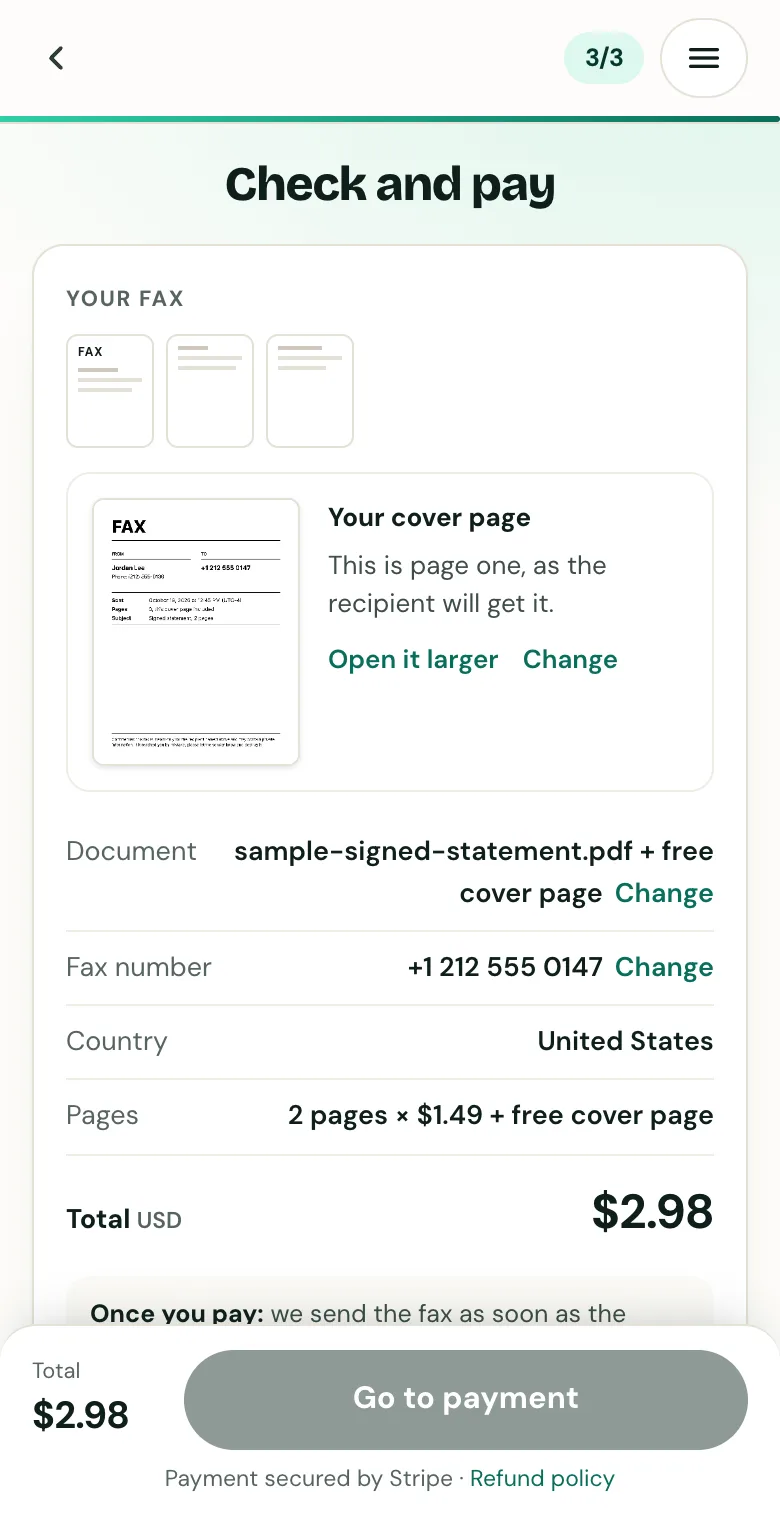
Check the cover page, the number and the total before you pay.
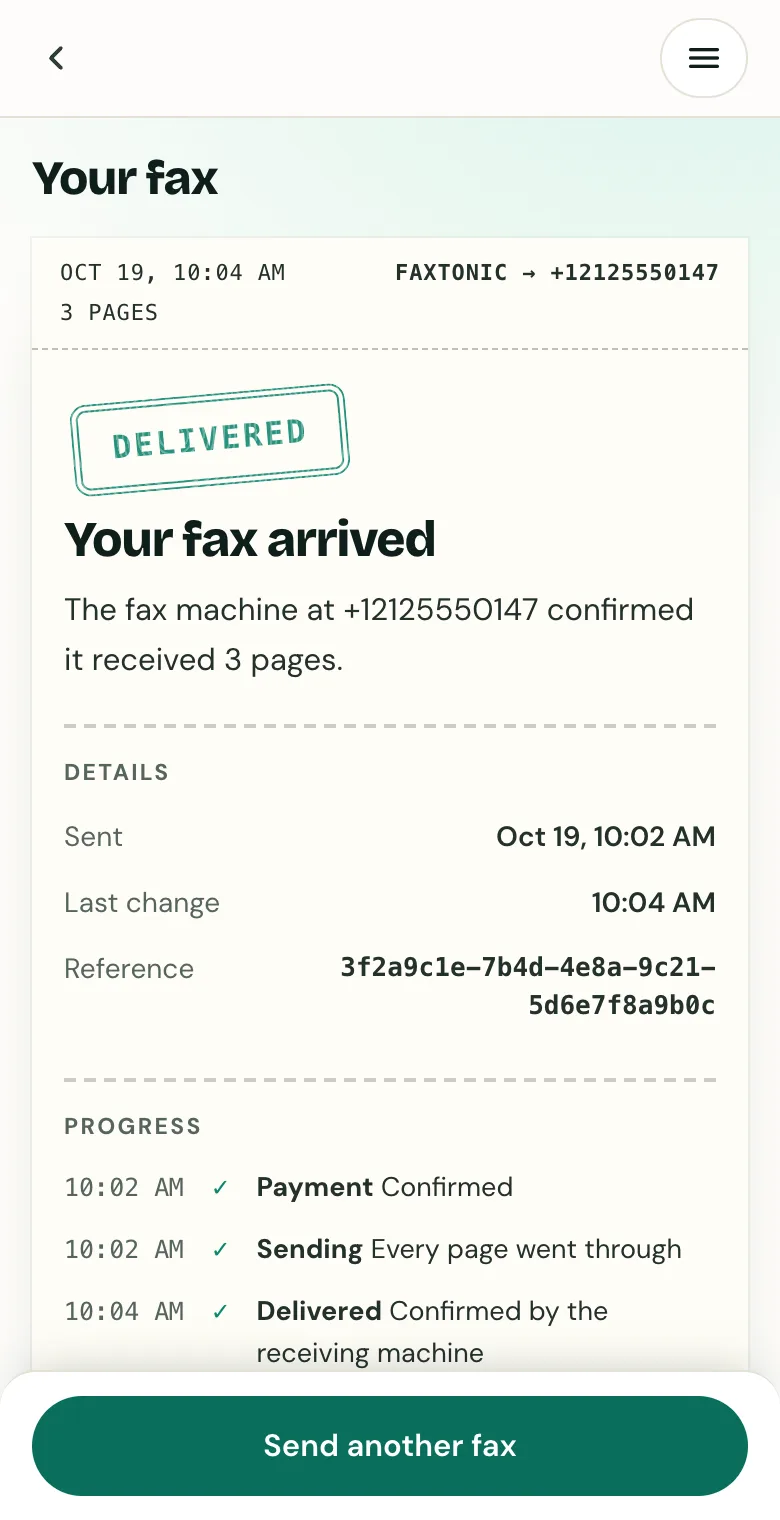
Follow your fax: the status page shows when it’s delivered.
FaxTonic can’t receive faxes. Give Social Security your phone number and postal address to reach you, not a fax number.
Official sources
- Social Security: Office locator
- Social Security blog: getting help from your local office (2025)
- Social Security: Field office data for app developers
- Social Security: Forms
- Social Security: Submit forms and upload documents
- Social Security: Form SSA-3368, disability report (PDF)
- Social Security: Hearing office locator
- Social Security: The hearing process
- Social Security: Electronic Records Express (PDF)
- Social Security POMS GN 03910.040: appointing a representative
- Social Security POMS DI 11005.056: Form SSA-827
- Social Security blog: Medicare Part B forms
- Social Security POMS SI 04020.020: SSI reconsideration requests
- Social Security POMS GN 03102.225: Form SSA-561
- Social Security: Documents for a Social Security card
- Social Security POMS GN 00301.031: faxed documents
- Social Security: Faxed applications (letter to advocates, 2023)
- Social Security: What you can do with my Social Security
- Social Security: Submitting documents online (FAQ)
- Social Security: Protect yourself from scams
FaxTonic is an independent fax service. It isn’t affiliated with or endorsed by any agency, insurer, court or company named in this guide. Fax numbers and rules change: when a letter or form gives you a fax number, use that one.