On this page
Check that you need it
The IRS asks you to file Form 14039 only in these cases:
- the IRS has told you to;
- you can’t use its Identity and Tax Return Verification Service;
- you want to report possible tax-related identity theft that the IRS doesn’t know about yet, such as a data breach.
And not in these:
- you’ve already sent one for the same incident, or filed one through IdentityTheft.gov;
- the IRS has already sent you a letter or notice about it, unless that letter asks you for the form. If you got a Taxpayer Protection Program letter, the IRS says not to file Form 14039;
- the IRS asked you to use the Identity and Tax Return Verification Service, or you already have;
- the theft isn’t tax-related: report it to the Federal Trade Commission at IdentityTheft.gov;
- you’re a business, trust, estate or tax-exempt organization: that’s Form 14039-B.
The form also says that when a parent or guardian used a dependent’s identity to file taxes, it isn’t identity theft and the form doesn’t apply.
Online, mail or fax: choose one
The form asks you to use one method only, not several. Online is the IRS’s preferred way: the online version of Form 14039 on irs.gov doesn’t need an IRS account, but it doesn’t take attachments. If you have documents to add, use fax or mail.
| Your situation | Where to fax |
|---|---|
| You’re replying to an IRS notice or letter (box 2 in section A) | The fax number printed on the notice. If it shows none, follow the notice’s mailing instructions instead. |
| Anyone else | 855-807-5720 (toll-free) |
If identity theft stops you from filing your return electronically, don’t fax the return: the form says to attach Form 14039 to the back of your paper return and mail it to the IRS location where you normally file.
What to include
- A cover sheet marked “Confidential”: the form asks for one on every fax.
- Sections A to E of the two-page form, all of which must be completed, with your signature in section E. A representative, conservator, parent or guardian can sign there instead when filing for someone else.
- Copies of supporting documents, if you add any: the form asks for clear, readable copies. When you file for someone else, section F says what to attach, such as a copy of the court certificate appointing you. A surviving spouse filing for a deceased spouse doesn’t need to attach anything, not even a death certificate.
After you send it
Don’t expect a quick reply. The IRS manual says it doesn’t acknowledge Forms 14039 on receipt; when a case won’t be closed within five business days, it sends Letter 5073C to confirm it has your claim. Cases are handled by its Identity Theft Victim Assistance staff, who may call you.
The IRS says it generally resolves cases within 120 days, but that they currently take 580 days on average. On 19 October 2026 its processing-status page showed it working on Forms 14039 received in August 2025.
Don’t send it twice, and don’t chase it. The IRS says duplicate forms and status calls slow cases down. Apart from answering any request for information promptly, there’s nothing to do until it contacts you. Confirmed victims are enrolled in the Identity Protection PIN program and get a new six-digit IP PIN each year.
FaxTonic sends faxes but can’t receive them. That’s fine here: the IRS replies by letter, and the form says it may phone you, so put a phone number on it.
How to fax Form 14039 with FaxTonic
- Fill in and sign Form 14039 from irs.gov, and gather any supporting copies.
- Scan or save the pages as one file. FaxTonic takes PDF, JPEG, and PNG files, up to 4 MB once prepared for faxing and 20 pages per fax.
- Open FaxTonic, add the file and keep the free cover page on. Write “Confidential, Form 14039” in the subject and tick the option that prints a confidentiality notice.
- Choose the United States and enter the number from your notice, or 855-807-5720. You see the price, $1.49 a page, before paying.
- Pay by card and keep a screenshot of the status page once the fax is delivered. FaxTonic deletes your document as soon as the fax is delivered, and after 24 hours at the latest.
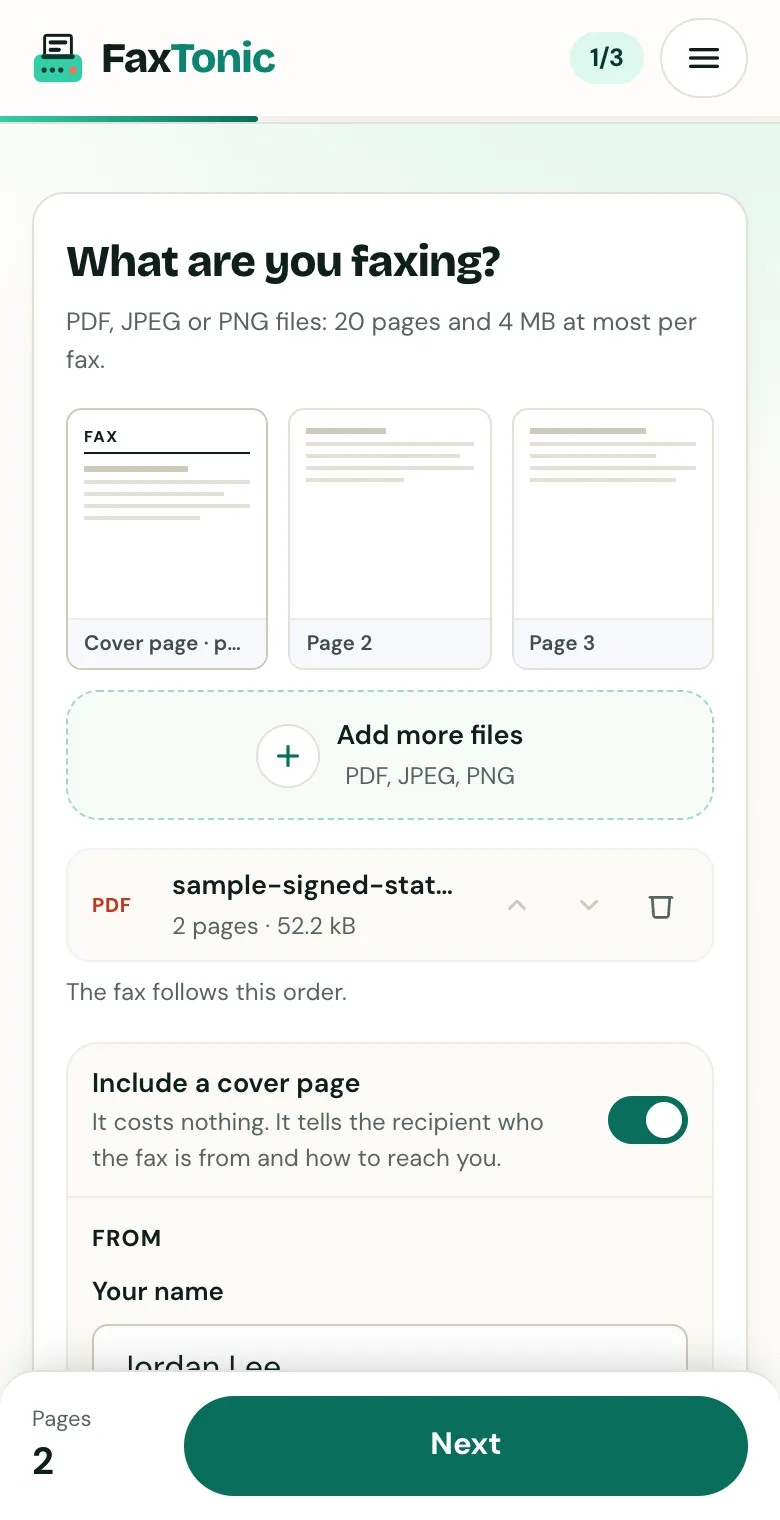
Add your file. The cover page is free, and you can turn it off.

Pick the country and type the fax number.
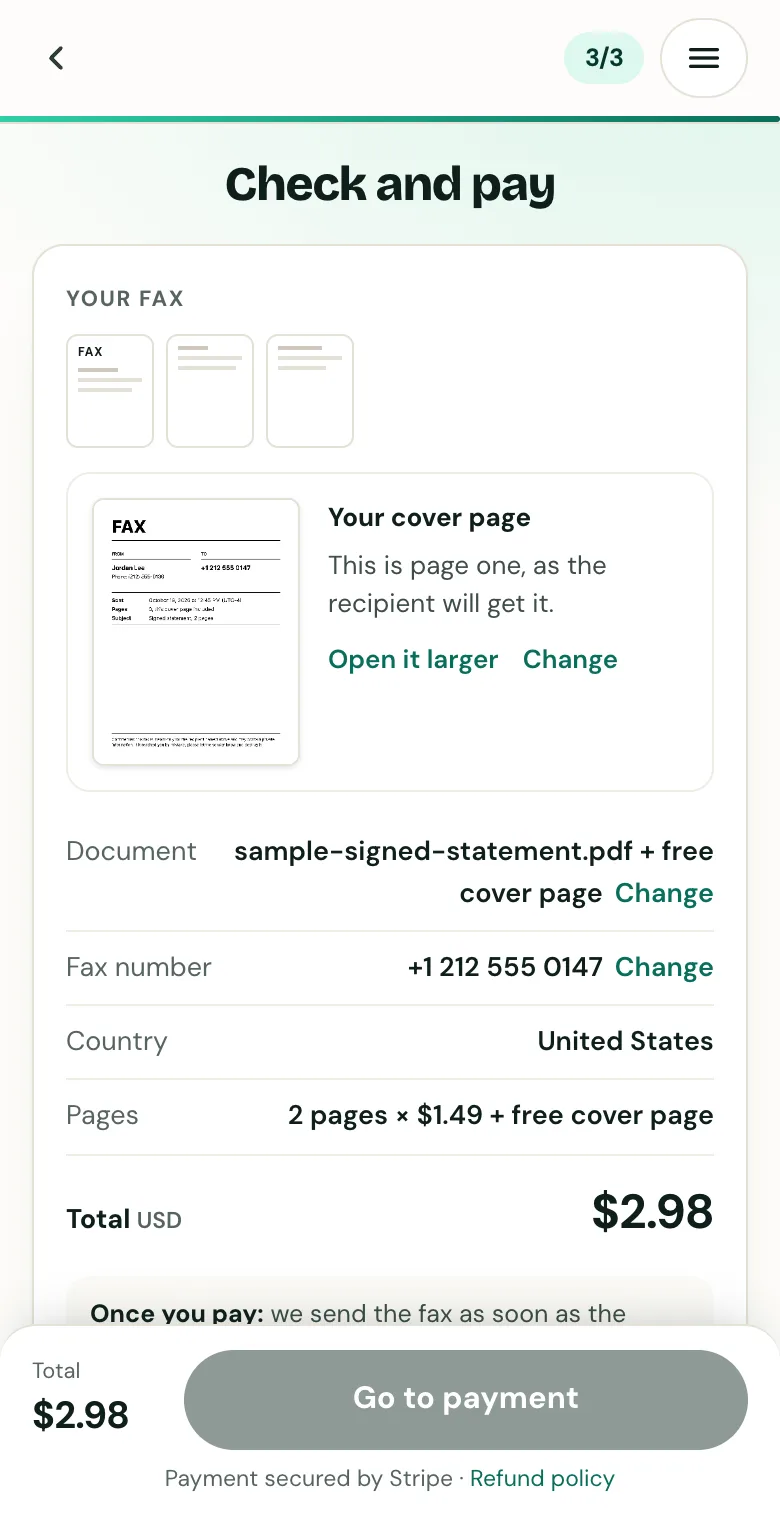
Check the cover page, the number and the total before you pay.
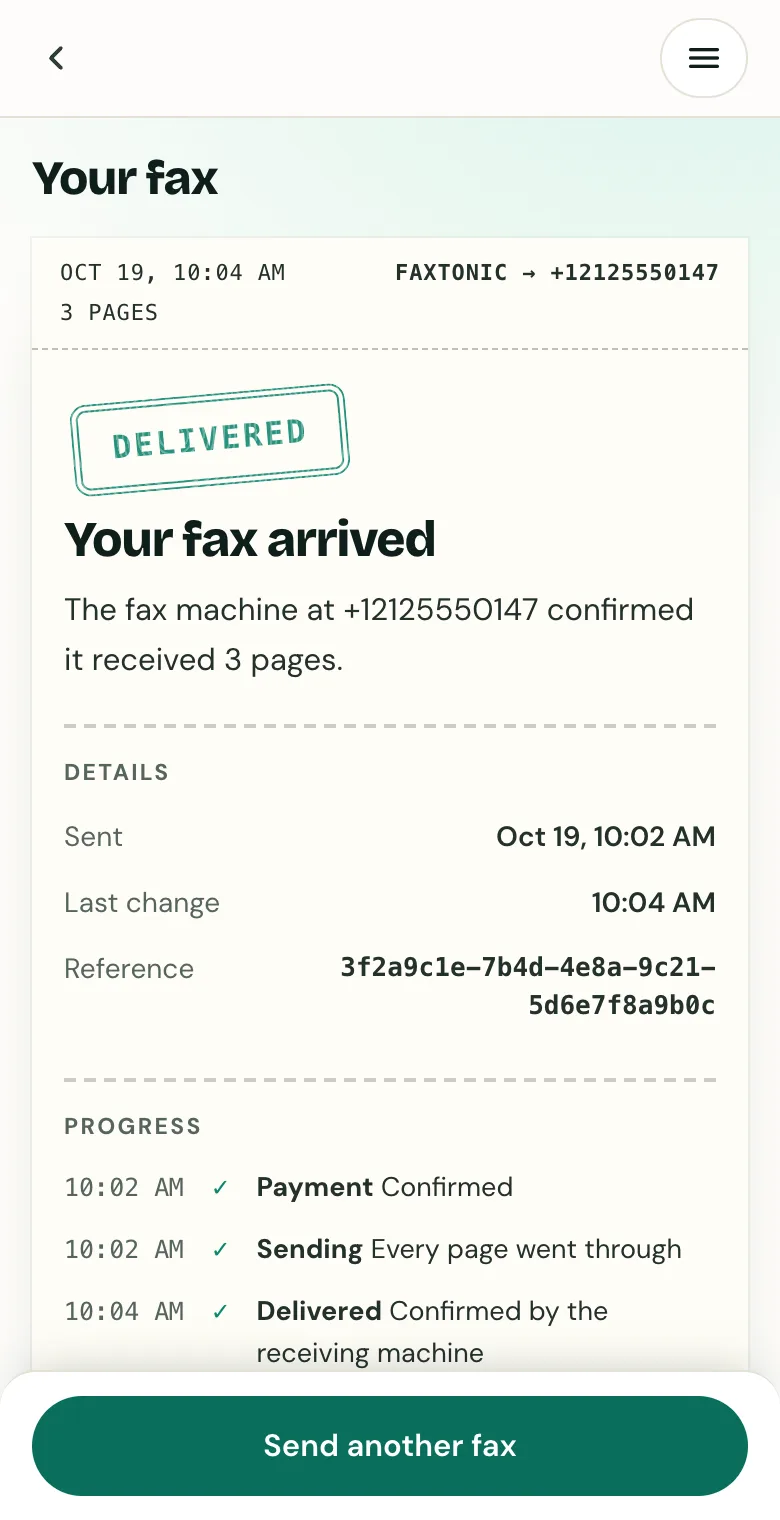
Follow your fax: the status page shows when it’s delivered.
Official sources
- IRS: Form 14039, Identity Theft Affidavit (PDF)
- IRS: Identity theft guide for individuals
- IRS: How IRS ID theft victim assistance works
- IRS: Mobile-friendly forms
- IRS: Processing status for tax forms
- Internal Revenue Manual 25.23.4, identity theft case processing
FaxTonic is an independent fax service. It isn’t affiliated with or endorsed by any agency, insurer, court or company named in this guide. Fax numbers and rules change: when a letter or form gives you a fax number, use that one.